
 Alexander Grant



“Success is not the result of spontaneous combustion. You must set yourself on fire.” — Arnold H. Glasow
Productivity isn’t about doing more—it’s about doing what truly matters with greater efficiency and focus. In a world full of distractions, achieving peak productivity is both an art and a science. But here’s the good news: You don’t have to be a superhuman to master it. You just need the right methods.
This premium guide dives deep into 10 proven strategies for boosting productivity. Whether you’re an entrepreneur, a creative professional, or someone juggling multiple roles, these techniques will help you work smarter, not harder.
1. The Eisenhower Matrix: Focus on What Matters
“What is important is seldom urgent, and what is urgent is seldom important.” — Dwight D. Eisenhower
The Eisenhower Matrix is a simple yet powerful tool for prioritizing tasks. Divide your to-do list into four quadrants:
- Urgent and Important: Do these tasks immediately.
- Important but Not Urgent: Schedule them.
- Urgent but Not Important: Delegate them.
- Neither Urgent nor Important: Eliminate them.
Example:
Instead of reacting to every email, categorize them. Urgent client inquiries? Answer immediately. Newsletter subscriptions? Archive or unsubscribe.
2. Time Blocking: Control Your Calendar

“Don’t prioritize your schedule; schedule your priorities.” — Stephen Covey
Time blocking involves dedicating specific time slots to particular tasks. This method eliminates multitasking and ensures you give your undivided attention to one thing at a time.
How to Apply It:
- Morning Block: Deep work like writing, coding, or brainstorming.
- Afternoon Block: Meetings and collaborative tasks.
- Evening Block: Planning or unwinding.
Example:
Elon Musk, known for managing multiple companies, uses time blocking to schedule his day in 5-minute intervals.
3. The 80/20 Rule: Focus on the High-Impact 20%

“Efficiency is doing things right; effectiveness is doing the right things.” — Peter Drucker
Also known as the Pareto Principle, this rule states that 80% of results come from 20% of your efforts. Identify and double down on those high-impact activities.
Example:
- If you’re in sales, focus on the top 20% of clients who generate 80% of revenue.
- As a writer, prioritize the articles or projects that bring the most engagement.
4. The Pomodoro Technique: Work Smarter, Not Longer
“Work expands so as to fill the time available for its completion.” — Parkinson’s Law
The Pomodoro Technique involves working in focused 25-minute intervals (Pomodoros), followed by a 5-minute break. After four Pomodoros, take a longer 15-30 minute break.
Benefits:
- Reduces burnout.
- Boosts focus and creativity.
- Makes big tasks feel manageable.
Example:
Author Chris Bailey used this technique while writing his book, completing chapters faster and with more clarity.
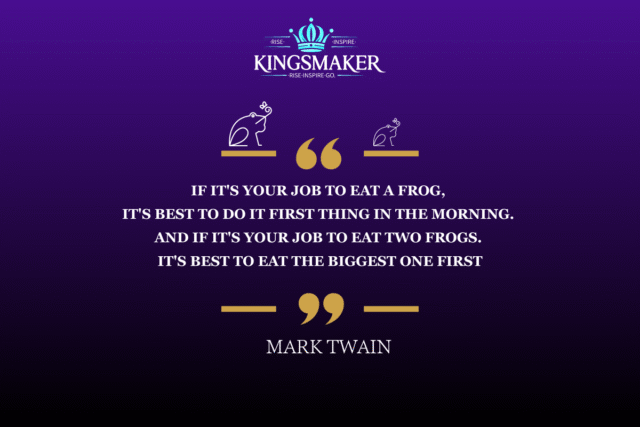
5. Eat the Frog: Tackle Your Hardest Task First
“If it’s your job to eat a frog, it’s best to do it first thing in the morning.” — Mark Twain
Your “frog” is the most challenging and important task of the day. By tackling it first, you set the tone for a productive day.
Example:
If you dread making sales calls, get them done in the morning. The sense of accomplishment will fuel you for the rest of the day.
6. Optimize Your Environment
“Your environment will eat your goals for breakfast if you let it.” — James Clear
A cluttered workspace leads to a cluttered mind. Create an environment that supports focus and productivity:
- Declutter your desk.
- Use noise-canceling headphones.
- Add plants or natural light.
Example:
Google’s open offices include collaborative spaces and quiet zones to suit different work styles.
7. Batch Similar Tasks Together
“It’s not that I’m so smart, it’s just that I stay with problems longer.” — Albert Einstein
Batching involves grouping similar tasks together to reduce the cognitive load of switching between activities.
Examples:
- Respond to emails all at once instead of checking your inbox throughout the day.
- Schedule social media posts in a single sitting.
8. Use Technology Wisely

“Technology is best when it brings people together.” — Matt Mullenweg
Leverage tools and apps to automate repetitive tasks and streamline workflows.
Recommended Tools:
- Trello or Asana for task management.
- RescueTime for tracking productivity.
- Grammarly for editing content.
Example:
A marketing team used Zapier to automate lead generation, saving 20+ hours a week.
9. Practice Mindfulness
“You should sit in meditation for 20 minutes every day—unless you’re too busy. Then you should sit for an hour.” — Zen Proverb
Mindfulness improves focus, reduces stress, and boosts creativity. Start or end your day with a simple mindfulness practice.
How to Start:
- Use apps like Headspace or Calm.
- Practice mindful breathing for 5 minutes before starting work.
10. Reflect and Improve
“What gets measured gets managed.” — Peter Drucker
At the end of each day, reflect on what went well, what didn’t, and how you can improve. Weekly reviews help identify patterns and refine your approach to productivity.
Example:
Tim Ferriss, author of The 4-Hour Workweek, uses a journal to analyze his daily wins and challenges.
Final Thoughts: Productivity as a Lifestyle

Productivity isn’t about cramming more into your day—it’s about creating a life where you have the time and energy for what truly matters.
As you incorporate these methods, remember: it’s not about being perfect but about making progress. Try one or two techniques at a time, and build from there.
“The secret of getting ahead is getting started.” — Mark Twain
Which of these strategies will you try first? Share this guide with someone who could use a productivity boost! Together, we can achieve more!
2 comments
Exactly the productivity boost I was looking for! These methods are straightforward, effective, and easy to implement. I’ve already started using a few and can feel the momentum building. Perfect for anyone who wants to get more done without burning out.
These productivity tips are spot-on and really practical. I especially like the emphasis on focusing on what truly matters instead of just doing more. The Eisenhower Matrix and Pomodoro Technique are game-changers for managing time and avoiding burnout!