
 Kimberly Bennett



“The people who are crazy enough to think they can change the world are the ones who do.” – Steve Jobs
Every groundbreaking innovation, every life-changing product, every awe-inspiring project began as a crazy idea. The kind of idea that makes others raise their eyebrows, laugh, or dismiss you as “dreaming too big.” But history teaches us one thing: the boundary between crazy and genius is action.
In this guide, I’ll show you exactly how to take even your wildest, most “impossible” ideas and turn them into something tangible, impactful, and extraordinary. With actionable steps, real-world examples, and practical tools, you’ll learn that no idea is truly unattainable if you dare to believe in it and follow through.
Step 1: Embrace the Madness
“All great deeds and all great thoughts have a ridiculous beginning.” – Albert Camus
Your first step is to stop apologizing for your big, bold, “unrealistic” ideas. The best creations are those that challenge norms and defy expectations. The Wright brothers dreamed of flying when people laughed at the idea. Elon Musk was ridiculed for wanting to commercialize space travel. Yet here we are, living in their vision.
How to Embrace Your Crazy Idea:
1. Change your mindset: Crazy isn’t bad—it’s revolutionary.
2. Visualize success: Imagine what the world will look like if your idea works.
3. Find your “why”: What problem does this idea solve? What’s the deeper purpose?
Example:
In the 1980s, the founder of FedEx, Frederick Smith, proposed an overnight delivery service—a seemingly impossible feat at the time. Today, it’s hard to imagine a world without it.
Step 2: Break the Vision into Manageable Pieces
“The journey of a thousand miles begins with one step.” – Lao Tzu
Big ideas often fail not because they’re unachievable, but because they overwhelm us. The trick is to break the idea into smaller, actionable steps.
How to Break It Down:
- Create a roadmap: Start with the big picture and reverse-engineer the process. What are the first three steps you can take today?
- Focus on milestones: Set achievable, short-term goals that build toward the ultimate vision.
- Iterate: Accept that the plan will evolve as you progress.
Example:
James Dyson spent 15 years and created over 5,000 prototypes before he perfected the first bagless vacuum cleaner. His key? Iteration and persistence.
Step 3: Surround Yourself with Believers

“You are the average of the five people you spend the most time with.” – Jim Rohn
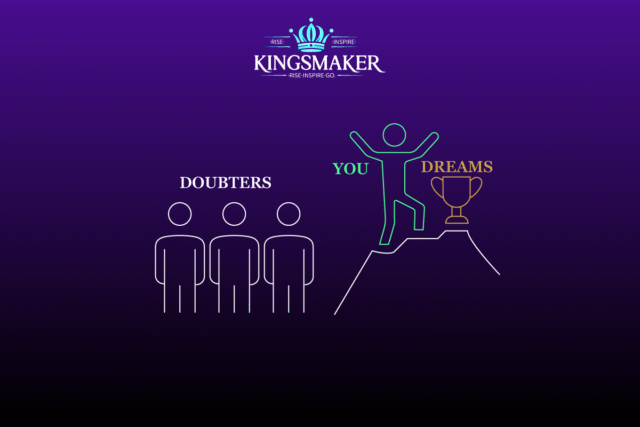
No matter how resilient you are, a strong support system can make or break your journey. Seek out people who uplift you, challenge you, and believe in your vision.
How to Build Your Tribe:
1. Find mentors: Look for people who have achieved something similar.
2. Collaborate: Surround yourself with like-minded individuals who bring different skills to the table.
3. Block out the naysayers: Learn to separate constructive criticism from negativity.
Example:
When Sara Blakely launched Spanx, many doubted her idea. But with encouragement from a small circle of supporters (including her own belief), she turned it into a billion-dollar empire.
Step 4: Prototype Fearlessly
“Perfection is the enemy of progress.” – Winston Churchill
The key to making any idea a reality is starting before you’re ready. Perfectionism is just procrastination in disguise. The faster you can prototype, test, and adapt, the faster you’ll move toward success.
How to Prototype Your Idea:
- Start small: Build a minimum viable product (MVP) or mock-up.
- Get feedback early: Share your prototype with trusted advisors or potential users.
- Learn from failure: Each iteration is a step closer to success.
Example:
Airbnb started as an experiment to rent out a few air mattresses in an apartment. Today, it’s worth billions.
Step 5: Take Risks, But Mitigate Them
“A ship in harbor is safe, but that is not what ships are built for.” – John A. Shedd
Big ideas inherently carry risks, but that doesn’t mean you should leap blindly. Smart risk-takers identify potential challenges and create contingency plans.
How to Balance Risk and Reward:
- Run the numbers: Assess costs, benefits, and potential ROI.
- Test the waters: Use small-scale experiments to validate your idea.
- Be adaptable: If Plan A fails, pivot to Plan B—or create a Plan C.
Example:
Netflix started as a DVD rental service by mail, but when streaming technology emerged, they pivoted—and dominated the market.
Step 6: Use Tools to Your Advantage
“The best investment you can make is in yourself.” – Warren Buffett
With the right tools and resources, even the wildest ideas become achievable. Whether it’s software, platforms, or networks, leverage what’s available to make your journey smoother.
Tools to Help You:
- Brainstorming: Tools like Miro or MindMeister for planning.
- Prototyping: Platforms like Figma for design or 3D printers for tangible products.
- Networking: LinkedIn or Meetup to connect with potential collaborators.
Example:
Tesla didn’t succeed because Elon Musk had the technology from day one. It succeeded because he leveraged the best tools and experts to make his vision a reality.
Step 7: Market the Vision, Not Just the Product
“Sell the problem you solve, not the product you make.” – Unknown
Ideas don’t sell themselves. They need a story—a narrative that resonates with people emotionally and intellectually.
How to Sell Your Vision:
- Tell a story: Share why you’re passionate about your idea.
- Make it relatable: Show how it solves a problem for others.
- Inspire confidence: Use testimonials, data, or early wins to build credibility.
Example:
When Apple launched the iPod, they didn’t sell it as a music player. They sold it as “1,000 songs in your pocket.”
Step 8: Stay Resilient and Adapt

“Success is stumbling from failure to failure with no loss of enthusiasm.” – Winston Churchill
Every great idea faces setbacks. The difference between those who succeed and those who don’t is resilience. Stay flexible, keep learning, and never lose sight of your “why.”
How to Build Resilience:
- Celebrate small wins: Acknowledge progress, no matter how minor.
- Reframe failure: Treat it as feedback, not defeat.
- Stay curious: Always look for ways to improve or pivot.
Quotes to Keep You Inspired
“If you’re not embarrassed by the first version of your product, you’ve launched too late.” – Reid Hoffman
“Dream big. Start small. Act now.” – Robin Sharma
“The best way to predict the future is to create it.” – Peter Drucker
“You miss 100% of the shots you don’t take.” – Wayne Gretzky
Final Thoughts: Make the Impossible Possible

Your craziest ideas are not just possible—they’re necessary. The world thrives on the boldness of visionaries who dare to dream bigger, act braver, and push boundaries further.
Action Plan:
- Believe in your idea, no matter how “impossible” it seems.
- Take one actionable step today toward making it a reality.
- Share your vision with others, and let their energy fuel your journey.
Ready to turn your wildest ideas into reality? Share this guide with someone who needs a reminder that crazy ideas are the seeds of greatness. Together, let’s create something extraordinary.

One comment
This article gave me the push I needed! Turning wild ideas into reality often feels overwhelming, but the practical steps laid out here make it feel doable and exciting. If you’ve ever doubted your crazy ideas, this guide is the perfect reminder to go for it.